









































































































































































With the release of the Michael Jackson biopic Michael, which charts his early years as a artist and a victim of his father’s abuse, we are getting a glimpse into the formative aspects of his career. Before we look at the film, let’s review his actual life.
Born in 1958 in the small, smoggy town of Gary, Indiana, Michael Jackson’s childhood was nowhere near perfect. Raised by Joe and Katherine Jackson, his early life was a constant battle: imperfect good against evil, filled with distinct characterization and horrific abuse at the hands of his father, and love and empty promises from his mother. Joe Jackson, when discovering his children’s interest in music, became latched to the idea of forming a family boy band and through years of trial and error, ‘The Jackson Five’ was born. This revolutionary Motown mid-western boy band was an almost instant success, very quickly releasing hit singles such as “I Want You Back,” “ABC,” “The Love You Save,” “I’ll Be There,” and much more. These young men were very quickly rocketed to fame and glorified by the media and at the center of it all was a songbird, the young Michael Jackson.
Approaching his teens, Michael made the decision along with his brothers to switch to Epic Records, however due to legal documents, this switch no longer allowed the brothers to operate under the band name ‘The Jackson Five,’ as it was owned by Motown, so they rebranded themselves as ‘The Jacksons.’ During this time, Michael distanced himself personally and professionally from Joe Jackson’s manipulative control.
Michael’s close work with producer Quincy Jones developed him as a mentor and key collaborator in Michael’s transition into stardom. Their first release together, Off the Wall, blended pop, funk, disco, and soul and produced hits “Don’t Stop ‘Till You Get Enough” and “Rock With You.” This album was followed by Thriller, which became the best-selling album in history, featuring revolutionary pieces such like “Billie Jean,” “Beat It,” and its namesake “Thriller.” Between Jackson’s raw talent and Jones’ masterful production skills this album perfectly blended pop, R&B, rock, and dance music. 5 years later, Quincy and Michael had their final collaboration with each other, Bad. At this point, Jackson had already solidified himself as a pop sensation in the eyes of the public, garnering the nickname “The King of Pop.” This record further solidified this title in its production of a record number of No. 1 singles for its time, including, “The Way You Make Me Feel,” “The Man in the Mirror,” “Smooth Criminal,” and its namesake “Bad.” In the years following, Michael continued to release hits “Black or White,” “Scream,” “You Are Not Alone,” and many more.
Jackson faced intense public scrutiny in the later decades of his life, no longer being in the headlines for his pop hits but instead for alleged sexual abuse of minors, court cases against companies, and inevitably his own death. From 1993, when he faced allegations of sexual abuse regarding several boys he had befriended and invited to his estate, “Neverland,” to 2005 with the highly publicized Santa Barbara trial, Jackson was repeatedly charged on multiple felony counts including child molestation and administering alcohol to a minor. After many months of testimony, Jackson was acquitted on all counts in June of that year, but he was financially bankrupt due to lawsuits, his reputation was ruined despite the acquittal, and he developed a drug dependency that affected his performance. He embraced multiple cosmetic procedures and developed many health struggles including rhinoplasty, due to not only insecurity but also due to breathing complications, a diagnosis of vitiligo and lupus, which stripped his skin pigment/natural melanin, a drug dependency, due to anxiety and insomnia, a cleft chin surgery/chin implant due to distorted self-image and insecurity, a scalp reconstruction surgery after the 1984 Pepsi commercial incident in which a failed pyrotechnic explosion led to Jackson’s hair catching fire and the spread of third-degree burns across his scalp, and vitiligo depigmentation treatments/scalp tattoos/cosmetic tattoos to hide the hair loss and damage to his scalp from the Pepsi incident. He died on June 25, 2009, from acute propofol and benzodiazepine intoxication, with the LA county coroner ruling his death a homicide because the drugs had been administered by his personal physician, Conrad Murray.
Now that we have discussed some of the topics covered in the movie (legal controversies and death were not included but may be in a follow-up film), let’s get into the pros and cons of its portrayal of these topics.
What the Biopic Does Right
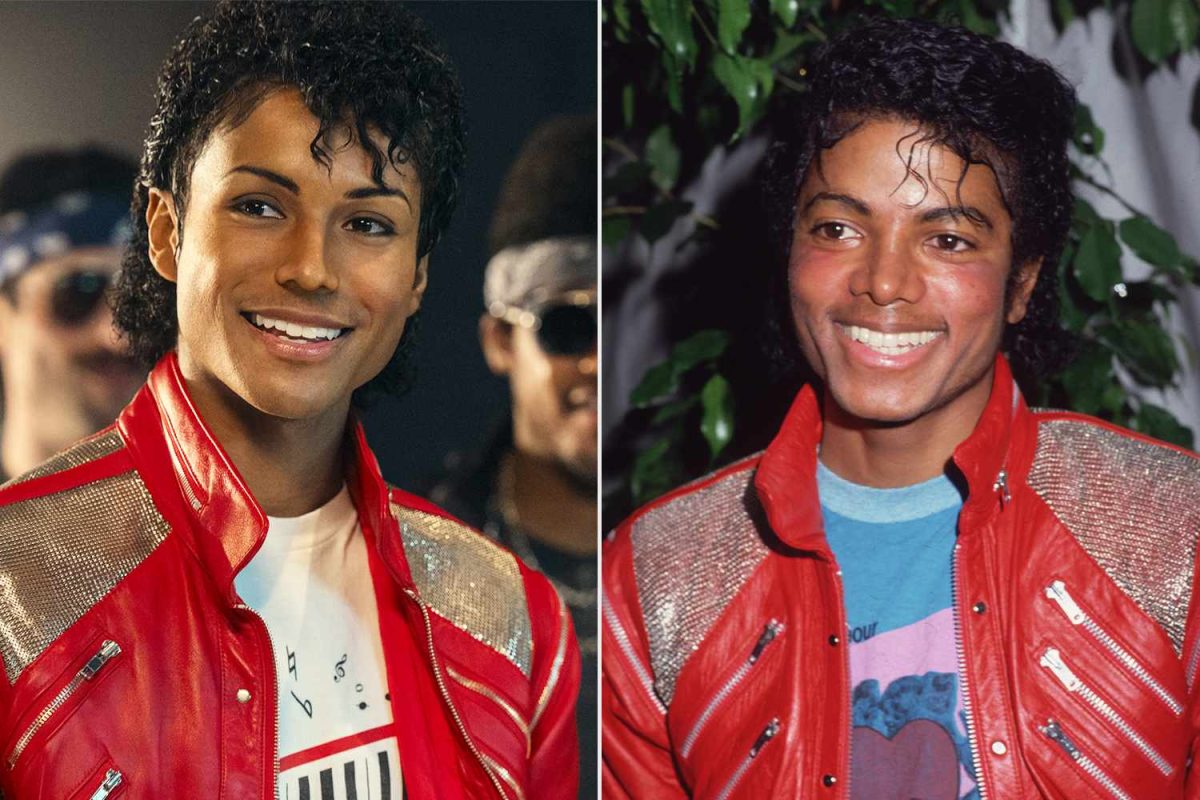
Jaafar Jackson’s lead performance: Michael’s nephew was cast to portray him in the biopic and managed to perfectly capture Michael’s showmanship, raw emotions, and interactions with the public. His performance was so convincing that Michael’s son, Prince Jackson, remarked in an interview, “I had not seen my father in a long time…Jaafar just embodied him, and brought him back in that moment.” He continued, “It was difficult to maintain and keep composure because I really just wanted to give him a hug in that moment. But I had to tell him, ‘Jaafar, I’m proud of you. You’re going to do great. But I need to take a little step outside and get some air.’”
Electrifying Performance Recreations: The directors creative vision for this movie payed off, as many of the musical sequences captured Michael’s concerts so well that fans have remarked that it felt like they were really there.
Raw Family Dynamics and Accurate Portrayal of Familial Abuse: Colman Domingo perfectly portrays the domineering patriarchal figure, Joe Jackson. This performance captures the tension of a dysfunctional family and why abuse often occurs. The brokeness and deep psychological elements Domingo brings to his performance as Joe are ‘unsettling,’ as many critics say, but that is also what makes it so stellar it feels raw and real.
What the Biopic Struggles With
Sanitized Narrative: The film candy-coats much of Jackson’s life, entirely skipping over his later life controversies with his estate, sexual abuse allegations, child abuse allegations, and drug abuse-induced death.
Shallow Characterization: This is to no fault of the actors, but many of Jackson’s inner mental struggles were not really portrayed due to a shallow plot. The film entirely glosses over MJ’s inner demons, loneliness, arrested development, and self-hatred/insecurity.
Editing: Much of the editing and pacing of the film feels disjointed, shaky, and sometimes even mechanical.
Yes, the film gets some things right, but as seen in everything Jackson went through in his life, it is clear that the film glosses over these details. There is a rich history there, but without mentioning it in the film, the audience is left with an incomplete story. With a little more depth and a smoother more complete narrative, it may have captured the brilliance and heartbreak that is Jackson’s life.